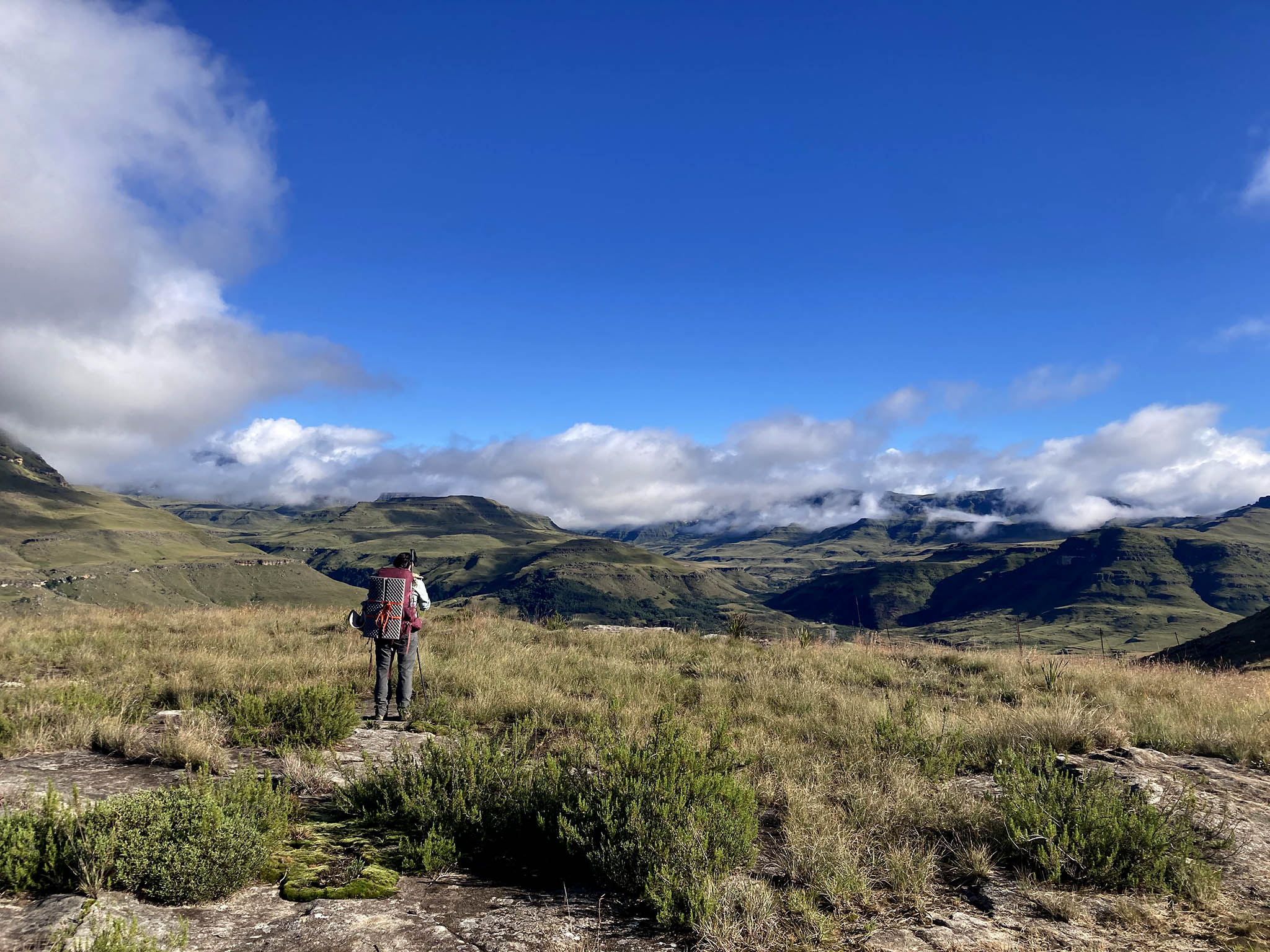
The Giant’s Cup Trail is a 59km long trail that forms part of the National Hiking Way, that leads you through the foothills of the southern sections of the Maloti-Drakensberg Park World Heritage Site. The trail starts at the spectacular Sani Pass and meanders along remote paths, streams and valleys in the rugged Drakensberg foothills and finishes at Bushman’s Nek in the extreme south of the Park. Our overnight accommodation is in five rustic, yet minimally equipped huts or converted farm houses.
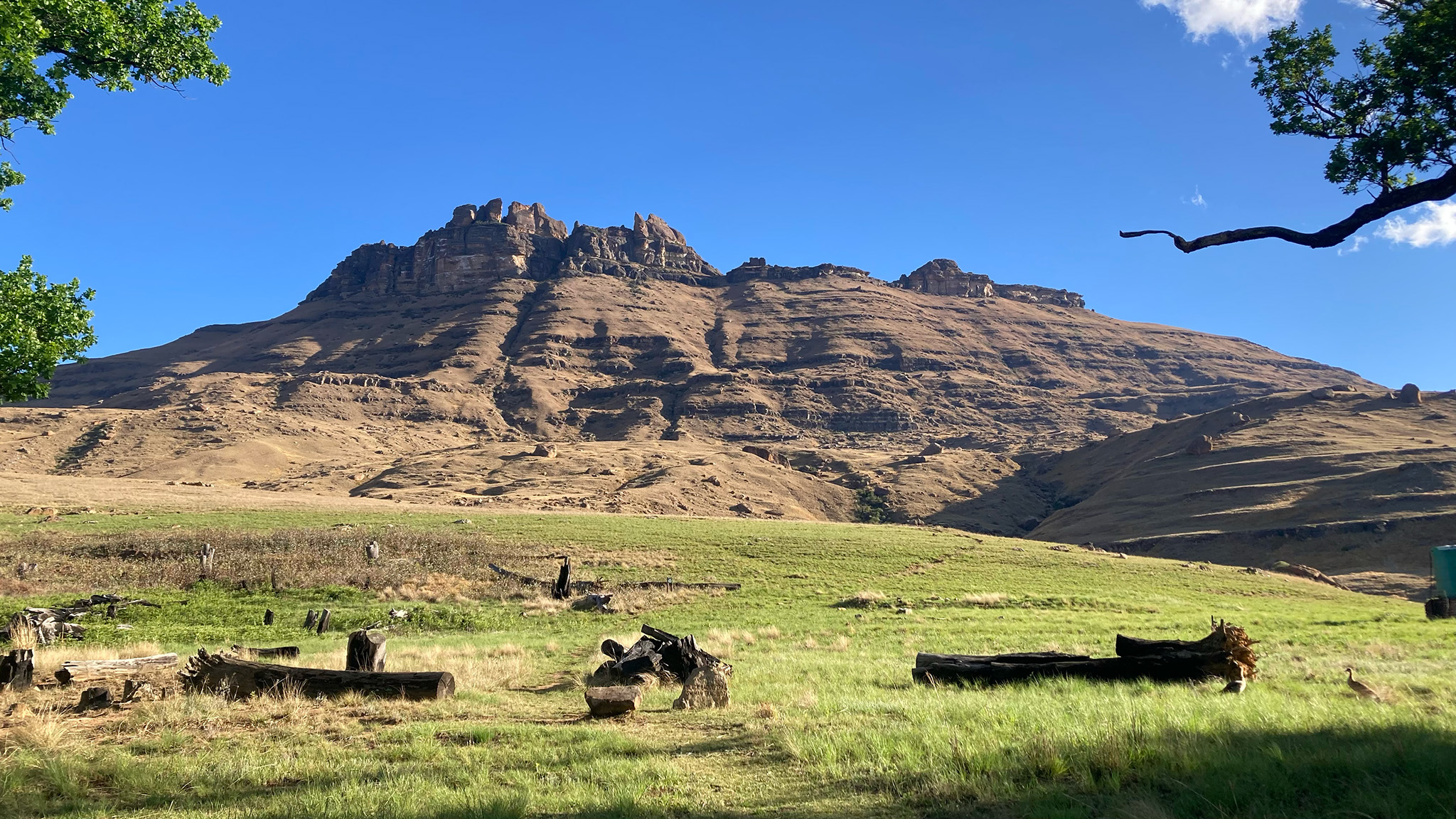
Although the trail are not particularly strenuous, the Drakensberg should never be taken lightly as snow has fallen in the mountains in every month of the year in the past, and the weather can change for the worse extremely quickly.
It’s not uncommon to have an afternoon thunderstorm in the summer months, and it’s advisable to be at the next overnight hut soon after lunch each day. This serves as a double benefit, you have the shelter of the overnight hut should a thunderstorm break over our group, and you will have time to enjoy the area around the hut, swim in the clear ‘berg streams, take photos or simply relax. The distances between the overnight points are not long, and this allows plenty of time to enjoy the mountains. You need to remain aware of time, however, so that you arrive at your overnight point with plenty of daylight to spare.
Giants Cup Trail Day 1: Sani Pass to Pholela Hut – 13,3 km, 5 hours, (6 hours with stops)
We will all meet and start from the Sani Pass Backpackers and head up Stormness, and from the top of the ridge you have an amazing view of the Giants Cup. Once we reach the Giants Cup trail, the pace becomes a lot easier and the views over the Pholela River is just wonderful when you look out over the expansive valley.
In the shadow of Ndlovini, look out for the pair of Black Eagles nesting in the cliff face, and the Lammergeier (Bearded Vultures), soaring over the plains, and the Eland that graze on the open grass plains.
Once we pick our way through the rock bands, we will follow the path down to Mermaid Pool where we will enjoy lunch. From her it’s a 45 minute walk to Pholela Hut, where we will spend our first night.
The hut is an old farmhouse with 30 bunk beds in four rooms. There is a toilet and bathroom with one basin and two showers as well as a covered braai area in front of the building.
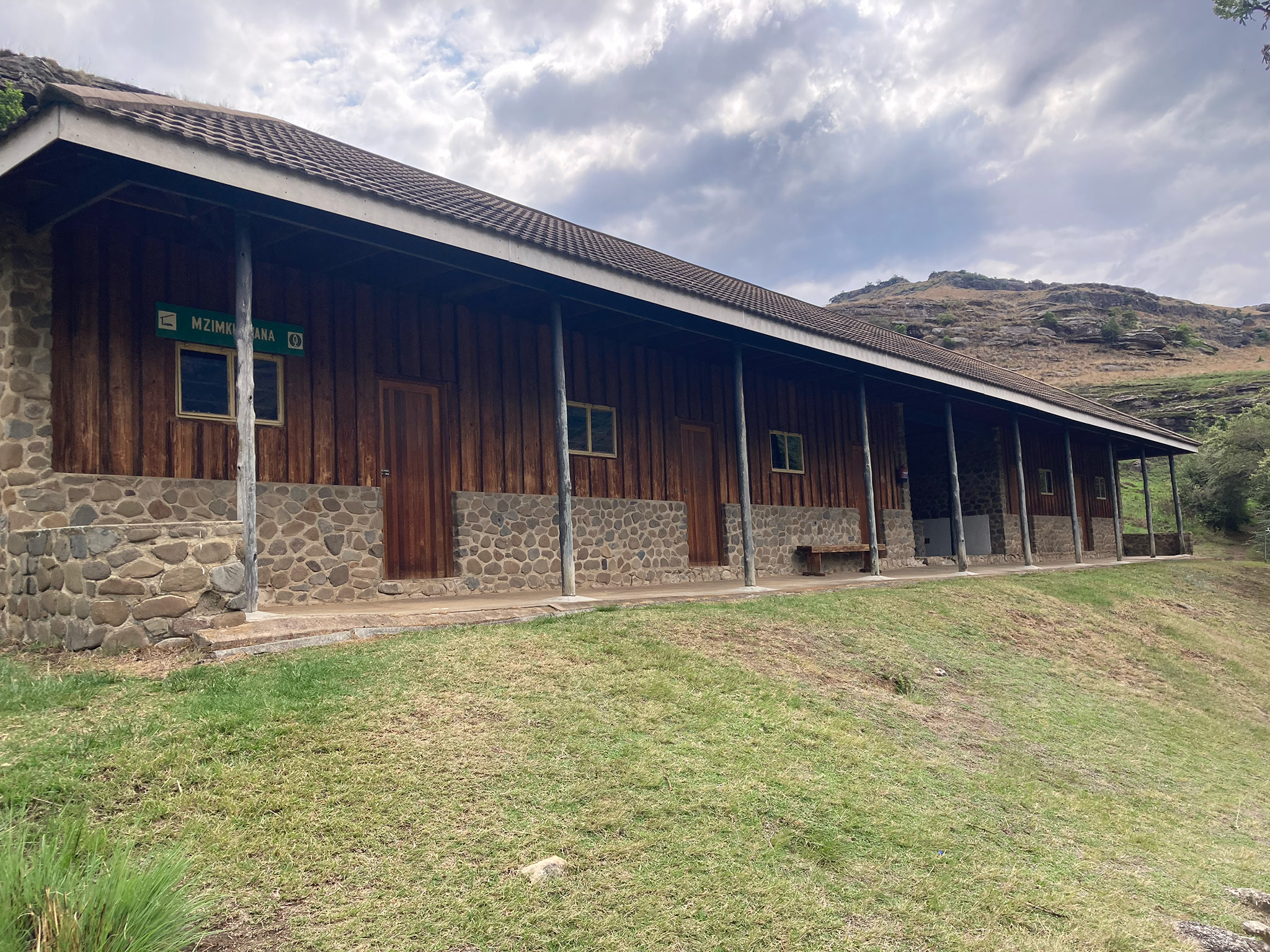
Day 2: Mzimkhulwana Hut
Day 2: Pholela Hut to Mzimkhulwana Hut, Garden Castle Section – 9 km: ± 2,5 hours. (±3,5 hours with stops)
From the hut we will find the path past the horse paddocks before heading up the slope away from the Pholela River. Once we reach the top of the ridge, we will pass an interesting rock formation called Tortoise Rocks. The rocks look not only like individual tortoises but from the other side of the ridge, it looks like a big Tortoise on the ridge. Once we cross the plateau, we will be heading towards Siphongweni Ridge, we will walk through a protea woodland and find a suitable spot to have lunch. After lunch we will make our way towards the Siphongweni River and soon the hut will come into view.
The hut consists of five rooms next to each other with three bunk beds in each room sleeping 6 people – unfortunately the hut does not have mattresses and we need to carry one for that night with us. An open area between the rooms serves as the kitchen and a small hut further upstream offers toilets, cold-water showers and hand basins.
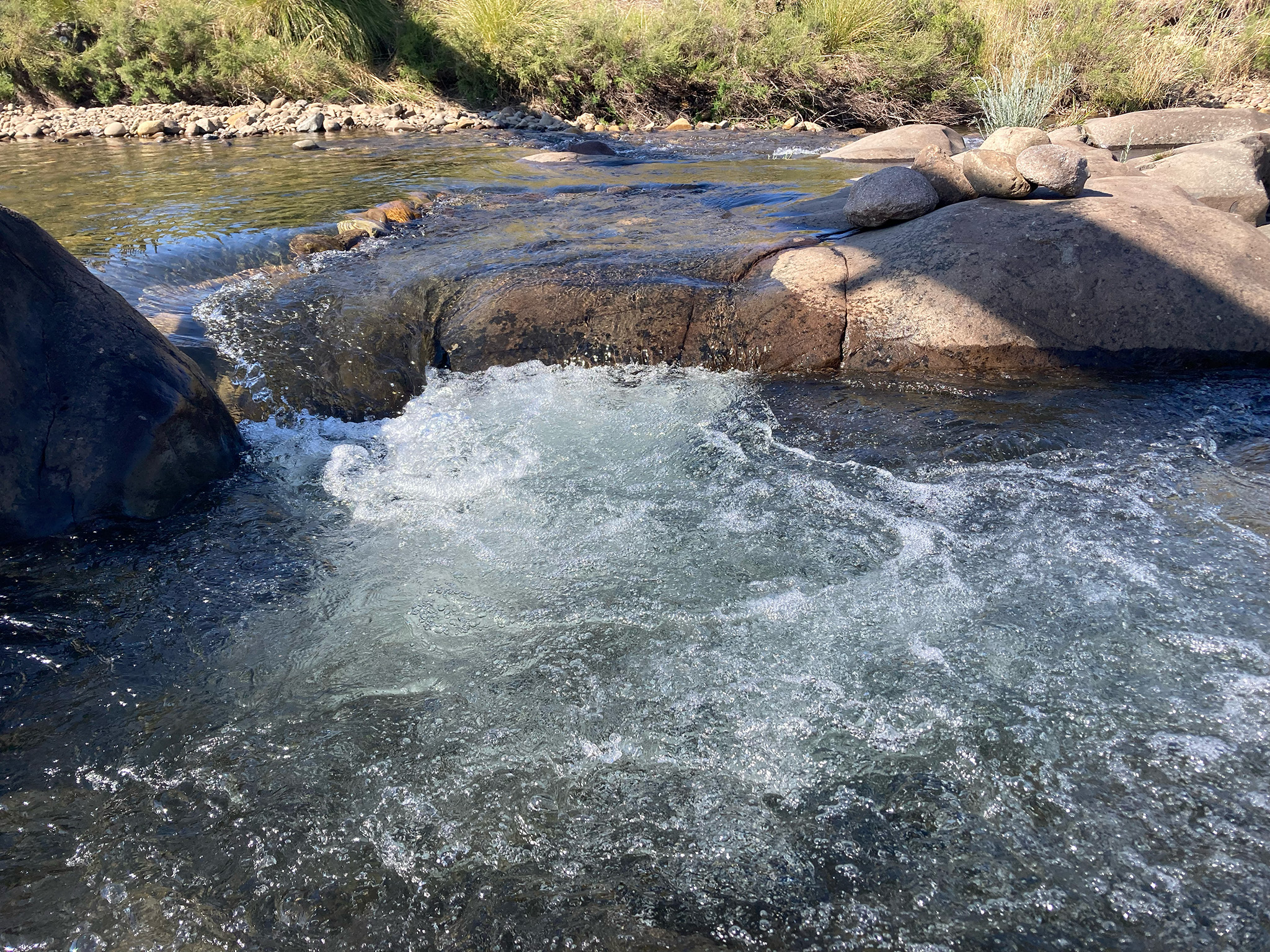
You can sunbathe on the rocks above the hut or swim in the large pool on the Siphongweni River, a tributary of the Mzimkhulwana River, about 30 m downstream of the bridge.
As the distance covered in Day 2 is quite short, there is lots of time to explore the area around the hut, swim or simply relax and enjoy the solitude and quiet of the mountains.

Day 3: Winterhoek Hut
Day 3: Mzimkhulwana Hut to Winterhoek Hut – 13,5 km: ±4 hours. (5 hours with stops)
From the Mzimkulwana Hut, the trail crosses the hanging bridge over the Mzimkhulwana River, and the trail then heads up Bamboo Mountain. From here you will be greeted by pleasant vistas, while on the long climb towards the Little Bamboo Mountain. The two Bamboo Mountains are named after the endemic Berg Bamboo Thamnocalamus tessellatus that grows in the area. Once you reach the top of the ridge, we will pass by Crane Tarn and Blue cranes frequent the area around the Tarn. After a well deserved break, we start heading down the other side of Crain Tarn, with the path leading through protea woodland following the stream till we start to veer off towards the Mzimkhulu River were we will cross the new suspension bridge, and a great spot to have some lunch as well.
From here the trail crosses over to the Mlambonja River, before we reach the huts, we have one last uphill before the home stretch to the hut.
The Winterhoek Huts are at the foot of the peak under some oak trees and consists of eight rondavels. Five of these have three bunk beds in each; one rondavel serves as a kitchen while another serves as the bathroom with cold-water showers.

Day 4: Swayiman Hut
Day 4: Winterhoek Hut To Swayiman Hut – 12,8 km: ±4,5 hours (6 hours with stops)
The trail winds up Black Eagle Pass and along the slopes of Garden Castle and along the crest of a ridge stretching to the north, heading towards the escarpment. The trail passes through typical highland rich in wildflowers in spring and summer, and along Black Eagle Pass, you have a good view of the Drakensberg escarpment. Keep an eye on the sky above, as this is the breeding and feeding range of both the Verreaux’s eagle (formerly the black eagle), the bearded vulture and the Cape Vultures nests on the cliffs.
It is advisable to carry extra water on this stretch as there are no reliable water sources on this stretch of the trail. The trail follows the plateau at a fairly constant height of 2 000 m, providing views of the Mlambonja and Mzimkulwana Rivers below on your right and the Mzimude River on the left. The trail winds through some protea woodlands after which you can see the Drakensberg Gardens Hotel amongst some pine trees in the valley to your right and a bit further ahead and on the left is the Ezemvelo KZN Wildlife Garden Castle and our destination – the Swayiman Hut.
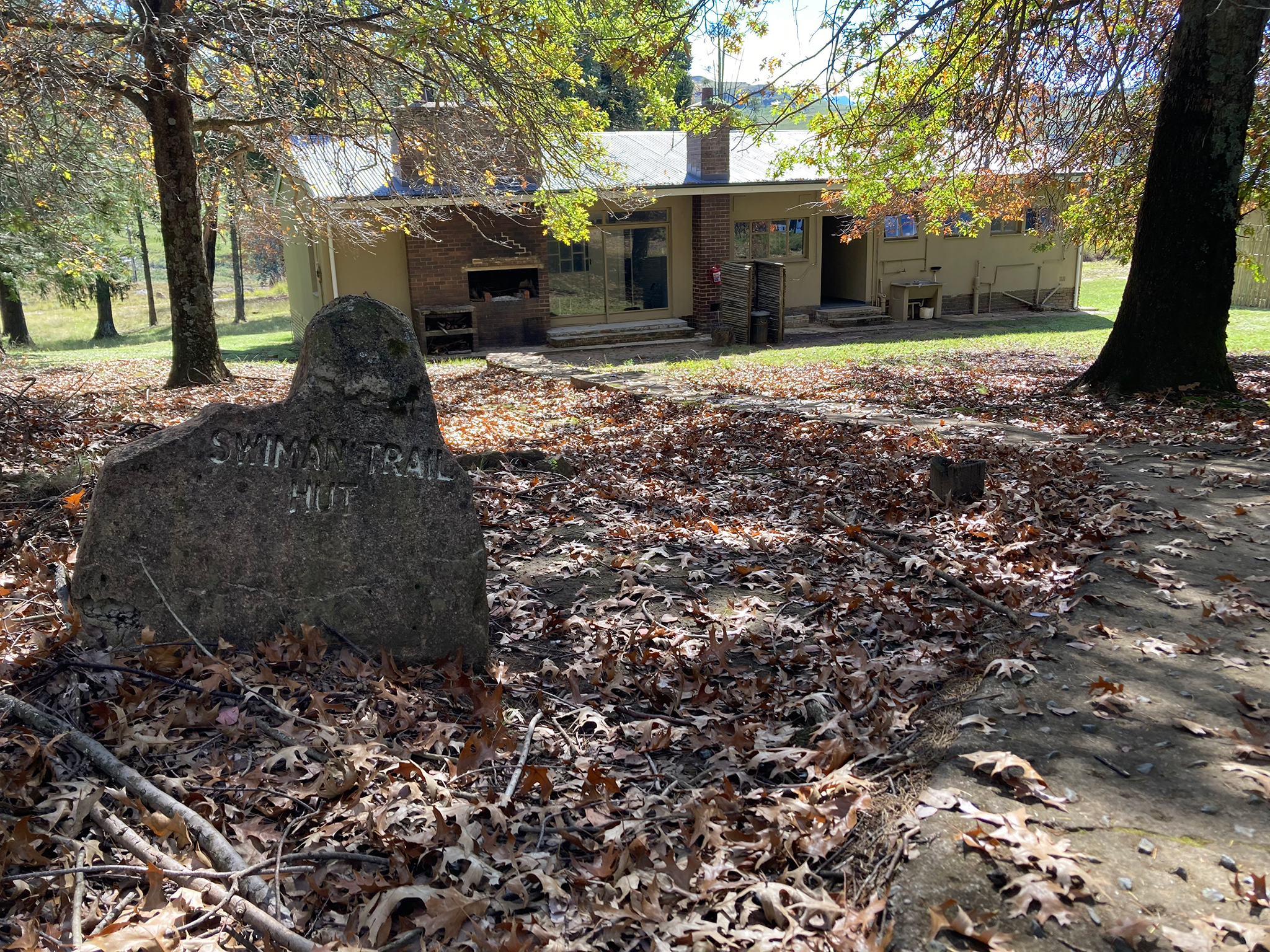
The hut is an old forestry house that has electricity and hot showers, a kitchen and a lounge with a fireplace as well as three bedrooms with four, four and six bunk beds respectively. The veranda offers a good view of Swayiman Peak (2 430 m).

Day 5: Bushman’s Nek Hut
Day 5: Swayiman Hut to Bushman’s Nek Hut – 12 km: ±4 hours (5 hours with stops)
The last stretch of the Giant’s Cup Trail leads up a ridge and down into the valley of the Mzimude River and to Langalibalele Peak with an old Forestry fire lookout tower overlooking the valley.
Several high peaks to help orientate you: Mlambonja (3 309 m), Wilson’s Peak (3 276 m), Mashai (3 313 m), Mzimude (3 210 m), Walker’s Peak (3 306 m) and Devil’s Knuckles (3 028 m).
After crossing the Mzimude River, keep right past the old fire-lookout on the ridge above you and head towards Langalibalele Peak and to the saddle to the right of the peak. From this saddle there is a good view down the valley to the Bushman’s Nek Hotel. High up to the right you can see the Devil’s Knuckles in the High Drakensberg , these peaks lie at the northern end of the Sehlabathebe National Park in Lesotho.
Bushman’s Nek Hut is similar to the Mzimkhulwana Hut having five rooms adjoining one another. The toilets and cold-water showers are located between the rooms.
Refrence used – KZN Wildlife
6 DAY GUIDED GIANT’S CUP TRAIL
6+PAX R4500-00, 4-5 PAX R5000-00, 3 PAX R6000-00, 2 PAX R7950-00, 1 PAX R13850-00
Cost includes: All overnight fees, shuttle fees, entrance and community levy as well as the first night at Sani Backpackers, including supper and dinner.
Excluded: Food for the trip, equipment hire, and accommodation ofter the trip.